


Container Transshipment Terminal Automation and Productivity Gains
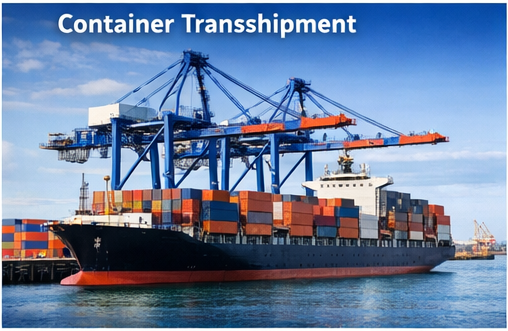
Container Transshipment in a Rapidly Evolving Global Trade Landscape
Container transshipment has become a structural pillar of modern maritime logistics as global trade routes grow more complex and shipping lines pursue greater efficiency. Rather than relying solely on direct port-to-port services, carriers increasingly route cargo through strategically located transshipment ports, where containers are transferred between vessels to optimize network coverage. This model allows shipping companies to deploy larger mainline vessels on high-volume routes while using feeder services to reach smaller or regional ports, reducing overall costs and improving service frequency.
One of the most significant trends shaping container transshipment today is the continued deployment of ultra-large container vessels (ULCVs). As vessel sizes exceed 20,000 TEUs, only a limited number of ports can handle these ships efficiently. This has accelerated the concentration of cargo flows around major transshipment hubs equipped with deep drafts, advanced cranes, and high-throughput yards. These hubs function as central nodes in global shipping networks, redistributing cargo across multiple regions while maintaining schedule reliability.
Digitalization and Automation at Transshipment Terminals
Technology adoption is redefining how container transshipment terminals operate. Automation of quay cranes, yard equipment, and gate operations is no longer limited to greenfield projects; existing terminals are retrofitting systems to improve productivity and reduce turnaround times. Artificial intelligence and predictive analytics are being used to optimize berth planning and container stacking, which is particularly critical in transshipment environments where dwell times are short and volumes fluctuate rapidly.
Port community systems and real-time data sharing between shipping lines, terminal operators, and customs authorities are also gaining traction. These digital platforms improve visibility across the supply chain, enabling better coordination between mainline and feeder services. As a result, transshipment ports can handle higher container volumes without proportional increases in physical infrastructure, supporting scalability in a constrained port development environment.
Sustainability and Network Resilience
Environmental considerations are increasingly influencing container transshipment strategies. Ports and terminal operators are investing in shore power, electrified equipment, and alternative fuels to reduce emissions. Shipping lines, under pressure from regulators and cargo owners, are favoring transshipment hubs that align with their decarbonization goals. This shift is encouraging competition among ports not only on efficiency and location, but also on environmental performance.
At the same time, recent disruptions—from geopolitical tensions to climate-related events—have highlighted the importance of network resilience. Diversification of transshipment hubs across regions is emerging as a risk mitigation strategy. Rather than relying on a single dominant transshipment port, carriers are developing multi-hub networks to maintain flexibility when disruptions occur.
Within this broader context, market fundamentals remain supportive. In simple terms, the sector continues to expand steadily as trade volumes grow and shipping networks become more hub-centric. The global container transshipment market is expected to see consistent growth over the next decade, reflecting the essential role of transshipment terminals in global logistics. According to Grand View Research, the global container transshipment market size is projected to reach USD 18.85 billion by 2030, growing at a CAGR of 3.6% from 2025 to 2030. This outlook underscores the long-term demand for efficient transshipment infrastructure, even amid cyclical trade fluctuations.
Regional Dynamics and the Road Ahead
Asia-Pacific continues to dominate container transshipment activity, driven by its central position in east–west trade lanes and proximity to major manufacturing centers. The Middle East and parts of Africa are also strengthening their positions as emerging transshipment hubs, leveraging geographic advantages at key maritime chokepoints. Meanwhile, ports in Europe and the Americas are modernizing container transshipment terminals to remain competitive as shipping alliances rationalize port calls.
Looking ahead, the evolution of container transshipment will be shaped by a combination of scale, technology, and sustainability. Transshipment ports that can integrate automation, offer reliable connectivity, and meet environmental expectations will be best positioned to attract long-term carrier commitments. As global trade continues to adapt to shifting economic and geopolitical realities, container transshipment hubs will remain indispensable connectors in the maritime supply chain, balancing efficiency with resilience in an increasingly interconnected world.

 English
 Arabic
 French
 Portuguese
 Deutsch
 Turkish
 Dutch
Dutch
 Italiano
 Russian
 Romaian
 Portuguese (Brazil)
 Greek
Greek
