


Microwave Devices Market Outlook with Next Gen Wireless Standards
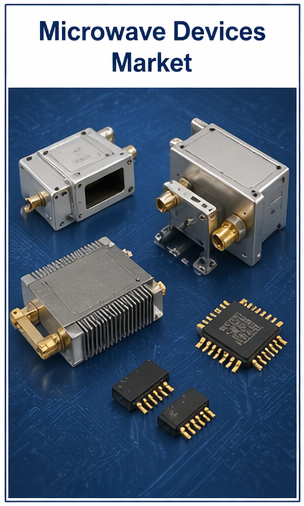
The Evolving Role of Microwave Devices in Modern Technology
Microwave devices have quietly become foundational to many of the technologies shaping daily life and advanced industries. From the familiar microwave oven in kitchens to sophisticated systems like microwave radar in aviation and defense, the scope and sophistication of these devices are expanding rapidly. Recent advancements are not just improving performance but also redefining how microwave-based systems integrate with digital ecosystems, automation, and intelligent sensing.
One of the most visible trends is the convergence of microwave technology with smart systems. Modern microwave devices are increasingly embedded with IoT capabilities, enabling real-time monitoring, adaptive control, and predictive maintenance. For example, the latest microwave oven models now feature sensor-driven cooking, where a microwave sensor detects humidity and temperature to automatically adjust cooking parameters. This evolution reflects a broader movement toward user-centric, energy-efficient designs that reduce manual intervention while improving outcomes.
Advances in Communication and Radar Technologies
The telecommunications sector is a major driver of innovation in microwave devices. With the global rollout of 5G and the early development of 6G frameworks, microwave frequencies are being leveraged for high-speed, low-latency data transmission. At the core of these systems are components such as the microwave amplifier and microwave transmitter, which are being engineered for higher efficiency, compact size, and enhanced thermal performance.
Microwave amplifiers, particularly those based on gallium nitride (GaN) technology, are gaining traction due to their ability to handle higher power densities while maintaining reliability. These amplifiers are critical in both communication infrastructure and defense applications, where signal strength and clarity are paramount. Similarly, the microwave transmitter is evolving to support broader bandwidths and improved modulation techniques, enabling faster and more secure data transmission.
In parallel, microwave radar systems are undergoing significant transformation. Modern microwave radar is no longer limited to traditional military or aviation uses; it is now widely deployed in automotive systems for adaptive cruise control, collision avoidance, and autonomous driving. These radars rely on precise signal processing and miniaturized components, making them more accessible and cost-effective for commercial applications.
Integration with Smart Sensing and Automation
Another important trend is the integration of microwave devices into advanced sensing systems. The microwave sensor has emerged as a key component in applications ranging from industrial automation to healthcare monitoring. Unlike optical or infrared sensors, microwave sensors can penetrate materials such as plastic, glass, and even walls, making them highly versatile for motion detection, level measurement, and security systems.
In industrial environments, microwave sensors are used for non-contact measurement of liquids and solids, improving safety and accuracy in harsh conditions. In smart homes, they enable motion detection systems that are less susceptible to environmental noise. This adaptability is driving increased adoption across sectors, particularly as industries move toward automation and digital transformation.
At the same time, energy efficiency and sustainability are becoming central design considerations. Engineers are focusing on reducing power consumption in microwave devices without compromising performance. For instance, newer microwave amplifiers are designed to minimize heat loss, while advanced microwave transmitters use optimized circuit designs to enhance energy utilization. These improvements are aligned with global efforts to reduce energy consumption and environmental impact.
Emerging Applications and Future Outlook
Microwave technology is also finding new applications in healthcare, aerospace, and scientific research. In medical diagnostics and treatment, microwave devices are used for imaging and targeted therapies, offering non-invasive alternatives with high precision. In aerospace, microwave systems support satellite communication, weather monitoring, and navigation, all of which require robust and reliable performance in extreme conditions.
A notable development is the use of microwave devices in advanced materials processing. Microwave heating offers faster and more uniform heating compared to conventional methods, making it valuable in industries such as ceramics, pharmaceuticals, and food processing. The evolution of the microwave oven into an industrial-grade processing tool highlights how traditional technologies can be repurposed for modern needs.
Amid these advancements, the market outlook remains strong. The global microwave devices market size is projected to reach USD 11.86 billion by 2030, growing at a CAGR of 5.9% from 2023 to 2030, according to Grand View Research. This growth is supported by increasing demand across telecommunications, defense, healthcare, and consumer electronics.
In essence, the projected expansion reflects not just rising demand but also the diversification of applications and continuous technological innovation. Microwave devices are transitioning from standalone components to integrated systems that power intelligent, connected environments. As industries continue to prioritize speed, efficiency, and precision, the role of microwave technologies will only become more critical.
Looking ahead, the future of microwave devices lies in further miniaturization, enhanced integration with AI-driven systems, and the development of new materials that can operate at higher frequencies with greater efficiency. Whether through a smarter microwave oven, a more powerful microwave amplifier, or a highly sensitive microwave sensor, these devices will remain at the forefront of technological progress, quietly enabling the systems that define modern life.

 English
 Arabic
 French
 Spanish
 Portuguese
 Deutsch
 Turkish
 Dutch
Dutch
 Russian
 Romaian
 Portuguese (Brazil)
 Greek
Greek
