


The Evolution of Door Handle Design in Britain Through the Centuries
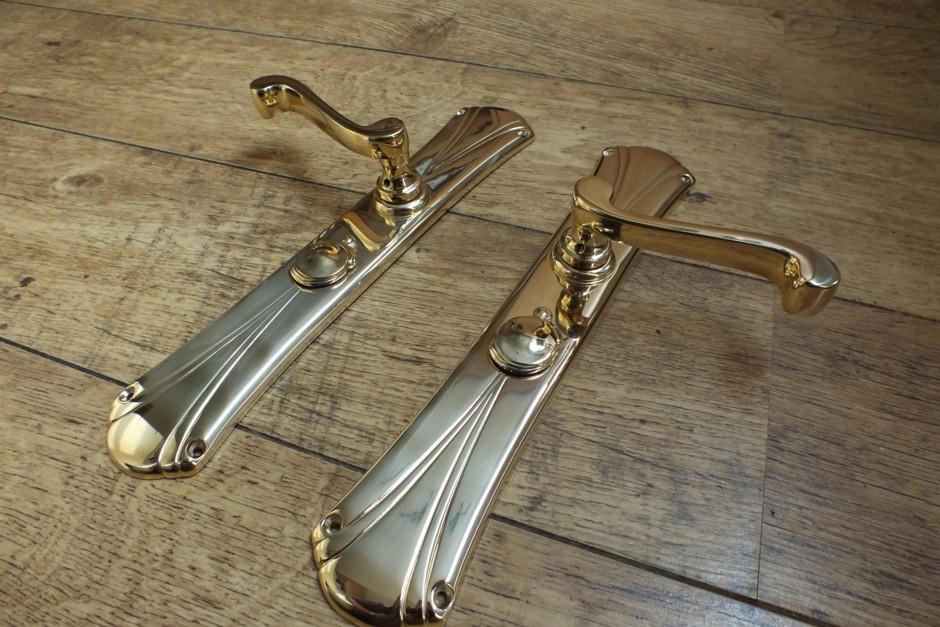
Door handles may seem like small, everyday objects, but their design history reveals a rich story of craftsmanship, technology, and social change. In Britain, the evolution of these functional yet decorative items mirrors broader shifts in architecture, industry, and domestic life.
From medieval iron latches to modern minimalist levers, the development of British door handles reflects centuries of innovation and cultural transformation.
Early Beginnings: Medieval Simplicity
In medieval Britain, doors were typically secured with heavy wooden bars, simple iron latches, or basic ring pulls. Security was more important than comfort or style, and most mechanisms were purely functional. Castles, monasteries, and manor houses used large iron fittings forged by blacksmiths, often featuring crude but durable designs.
At this stage, what we now recognize as British door handles did not yet exist in their refined form. Instead, doors were opened using rings, knockers, or sliding bolts. Ironwork was hand-forged, meaning each piece was unique, though ornamentation was minimal and usually reserved for wealthy households or religious buildings.
The Renaissance Influence: Craftsmanship Emerges
During the Tudor and Elizabethan periods, design began to take on greater importance. Wealthy homes and royal buildings started incorporating more decorative ironmongery. Handles and latches became more refined, often featuring scrollwork and intricate detailing inspired by European Renaissance art.
Blacksmiths began experimenting with symmetry and ornamentation, gradually transforming basic functional items into expressions of status. Early versions of British door handles during this era were still predominantly made of wrought iron, but they began to show signs of artistic craftsmanship rather than purely utilitarian design.
The introduction of brass also started to emerge in higher-end homes, offering a brighter and more polished alternative to iron.
The Georgian Era: Elegance and Proportion
The Georgian period (1714–1830) marked a major turning point in British interior design. Architecture became more symmetrical, elegant, and influenced by classical ideals. This shift extended to interior fittings, including door hardware.
During this time, british door handles evolved significantly in both form and function. Brass became the dominant material due to its durability and ability to be polished to a high shine. Handles were often designed as part of a complete architectural aesthetic, matching hinges, locks, and decorative plates.
The invention of the mortise lock system also changed door hardware design. Handles were no longer just simple pulls; they became part of a more complex mechanism that improved security and ease of use. Georgian handles often featured knobs rather than levers, with round or oval shapes becoming popular in elegant townhouses and country estates.
The Victorian Era: Industrial Innovation
The Industrial Revolution brought mass production, transforming how everyday objects were made. Door hardware was no exception. Factories could now produce identical components at scale, making decorative fittings more accessible to the growing middle class.
Victorian design was known for its elaborate ornamentation. This was reflected in the style of British door handles, which often featured ornate patterns, floral motifs, and heavy brass or iron construction. Handles were no longer exclusive to the wealthy; they became a standard feature in urban housing across Britain.
The rise of new manufacturing techniques also allowed for greater experimentation with materials and finishes. Nickel plating, porcelain inlays, and mixed-metal designs became increasingly popular. Functionality improved as well, with more reliable locking mechanisms and ergonomic shapes emerging.
Early 20th Century: Simplicity and Function
As Britain moved into the Edwardian period and beyond, design trends began to shift away from Victorian excess. The Arts and Crafts movement, in particular, emphasized simplicity, honesty in materials, and handcrafted quality.
During this time, british door handles began to adopt cleaner lines and less decorative detail. Designers like William Morris influenced a return to craftsmanship, focusing on usability and subtle beauty rather than excessive ornamentation.
By the early 20th century, especially after World War I, practicality became increasingly important. Mass housing developments required affordable and functional fittings. As a result, door handle design became more standardized, with simpler brass and steel levers replacing elaborate Victorian styles.
Mid to Late 20th Century: Modernism and Standardisation
The post-war era brought modernist design principles into British homes. Minimalism, efficiency, and new materials such as stainless steel and aluminum began to dominate.
In this period, door handles underwent a dramatic transformation. The traditional knob gave way to the lever handle, which was easier to use and met emerging accessibility standards. This change was not only aesthetic but also practical, allowing for easier operation in public buildings and homes alike.
Design became more uniform, especially in commercial architecture. Function took priority over decoration, and door hardware was often chosen to blend seamlessly into modern interiors rather than stand out as decorative elements.
Contemporary Design: Innovation and Style
In the 21st century, door handle design in Britain has become a blend of tradition and innovation. Designers now experiment with a wide range of materials, including stainless steel, glass, matte black finishes, and even smart technology integration.
Today’s door handles reflect both heritage and modern living. While minimalist styles dominate contemporary homes, there is also a strong revival of traditional designs in period restorations and luxury properties. This balance between old and new shows how deeply rooted door hardware is in architectural identity.
Smart locks and digital entry systems are also reshaping the function of door handles. Keyless entry, biometric scanners, and app-controlled locks are becoming increasingly common, blending mechanical design with advanced technology.
Cultural Significance and Design Legacy
Beyond their practical purpose, door handles in Britain represent a continuous thread of design history. Each era reflects the values and technologies of its time—from medieval security concerns to Victorian decoration, from industrial mass production to modern digital convenience.
The story of British door handles is ultimately a story of adaptation. As homes changed, so did the objects within them. Yet despite centuries of transformation, the fundamental purpose remains the same: to provide access, security, and a tactile connection to the spaces we inhabit.
Conclusion
The evolution of door handle design in Britain offers a fascinating lens through which to view broader historical and cultural shifts. From simple iron fittings in medieval times to sleek smart handles in modern homes, each stage reflects changes in society, technology, and aesthetic preference.
What began as a purely functional object has become a carefully considered element of design. And while styles will continue to evolve, british door handles will remain an essential part of architectural identity, bridging the past and future in a single, everyday touchpoint.

 English
 Arabic
 French
 Spanish
 Portuguese
 Deutsch
 Turkish
 Dutch
Dutch
 Russian
 Romaian
 Portuguese (Brazil)
 Greek
Greek
